The practical answer
Event and group-stay enquiries need enough information to begin a useful discussion without forcing the guest to complete a detailed planning document. Explain confirmed venue or accommodation options, ask practical routing questions and make the handover to the hotel team reliable. Keep availability and commercial terms subject to appropriate confirmation.
For implementation support, explore our website design services.
Separate different enquiry needs
Identify which requests the property can serve, such as group accommodation, meeting space or a combined stay and event. Do not assume that one generic form fits every situation. Explain the appropriate route and the type of discussion that follows. For an illustrative meeting enquiry, expected date, approximate group size and a contact method may help the hotel respond, while detailed catering choices can come later. Keep unsupported event types out of the promotional copy. The website should make the property’s actual capabilities understandable before asking a prospective organiser for personal details.
Provide accurate information before the form
Show confirmed venue features, relevant room options and practical conditions in readable text. Use current photographs and clarify when a layout is illustrative. Capacity can depend on configuration, equipment and operational requirements, so avoid presenting a single number without appropriate context. Give guests a way to discuss specific accessibility or technical needs directly. A common mistake is relying on an attractive venue image while omitting basic information that determines fit. The first enquiry is more useful when the organiser already understands what the property can reasonably offer.
Ask only the questions needed to route the request
Use clear labels and distinguish optional preferences from essential information. Allow guests to describe uncertainty, such as flexible dates or an approximate attendance range. Avoid making a final budget or complete specification mandatory when the organiser is still gathering options. Explain why requested details are needed and how the team will use them. Test the form on a phone and preserve input when validation fails. A shorter form is not automatically better, but every field should have a clear role in beginning the conversation and reaching the right hotel staff.
Make delivery and follow-up responsibilities explicit
Route enquiries to the appropriate team and test that staff actually receive them. Use a clear confirmation message that distinguishes successful submission from confirmed availability or a booking. Set response expectations only where the hotel can maintain them. Provide an appropriate alternative contact route if the online form fails. For an illustrative group request, the organiser should understand that a team member will review the requirement rather than assuming rooms have been reserved. Reliable handling protects both the guest’s planning process and the property from commitments that no authorised person has confirmed.
Use enquiry patterns to improve the information
Review repeated questions about dates, layouts, meal arrangements or accommodation combinations. Where the hotel can answer a recurring question publicly, improve the relevant page. Keep customer-specific pricing and private planning details in the direct discussion. Track unsuitable requests separately from technical failures or unavailable dates. A rise in form volume is not necessarily useful if the page attracts events the property cannot support. Assess whether enquiries are more informed and easier to route, with the reservations or events team contributing to the review.
Help organisers identify the right discussion
An organiser may be enquiring about accommodation, a meeting, a social event or several needs together. Explain the request types the property can actually support and show the appropriate contact route. This helps the visitor begin with the right team instead of trying to interpret an internal department name. Keep the description aligned with current capabilities and avoid implying availability before the hotel has checked the requirement.
An illustrative corporate group might need rooms and a meeting arrangement but not yet know the final attendance. The first contact should allow that uncertainty. Explain which approximate details help the hotel begin the discussion and which decisions can follow later. A well-designed journey supports early planning without treating an incomplete event brief as an invalid enquiry.
Provide verified context before asking for details
Organisers benefit from understanding the property's relevant facilities, broad process and important limitations before submitting a form. Use current, approved information rather than relying on promotional adjectives. Where layouts, capacity or service arrangements depend on the event, explain that the hotel must confirm suitability. Do not turn a representative example into a fixed commitment that every request can receive.
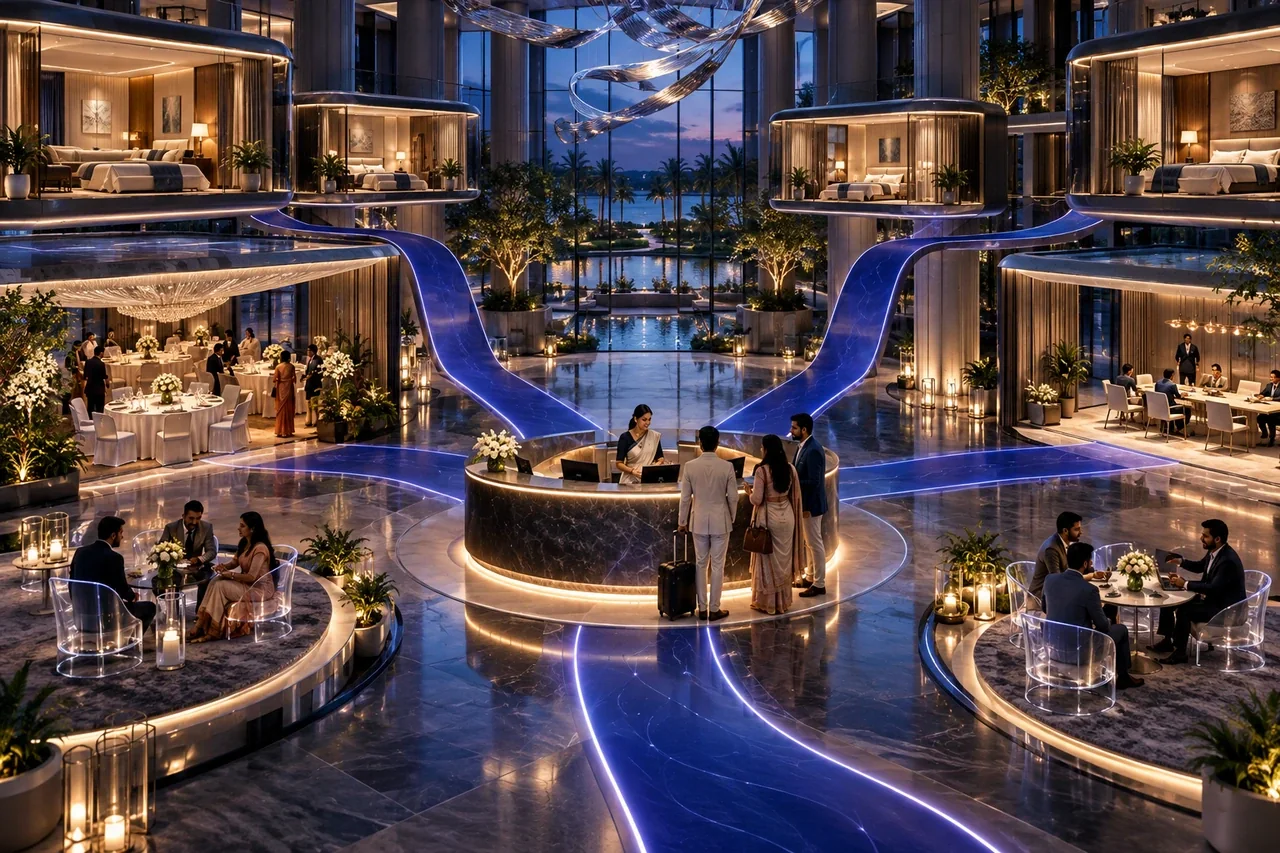
Use images responsibly. Conceptual or AI-generated event imagery should be clearly distinguished from actual property photographs and should not imply facilities that have not been verified. On a live hotel page, a guest needs to know what the venue genuinely offers. The content can still be attractive through clear structure, helpful explanations and accurate examples of the planning questions involved.
Ask for routing information in a manageable first step
Decide which details are needed to direct the request: an approximate date or period, the type of requirement, expected group size and a contact route may be sufficient. Do not require a final rooming list, detailed catering choices or a complete agenda before a preliminary conversation. Those details can be collected later when the hotel has established whether it can help.
Allow organisers to explain uncertainty in ordinary language. A fixed date selector or narrow category list can make a flexible request difficult to express. Clear labels and a useful message field often provide a better starting point. The form should reduce the work required to begin a meaningful discussion while giving the receiving team enough context to avoid an unnecessary chain of clarification messages.
Keep acknowledgement separate from confirmation
A submitted enquiry is not a confirmed booking or a hold on availability. Make the acknowledgement clear about what has happened and what the next response covers. Do not use a success message that could reasonably imply that space or rooms have been reserved. The distinction protects the organiser's planning and helps the hotel maintain consistent expectations across the website and subsequent communication.
Verify the request reaches the intended team and that response ownership is defined. A form can appear to work while messages are misrouted or left unattended. Use an authorised end-to-end test and record any external settings that still need attention. The enquiry journey includes both the website interaction and the operational handover, so both require a practical check.
Improve the page from recurring planning questions
Review the questions staff repeatedly answer after receiving event or group requests. Missing information about the process may belong on the page; a variable requirement may belong in a later planning conversation. Make that distinction before adding more required fields. The goal is to support the organiser's decision, not to move every administrative task into the first contact form.
Keep promotional descriptions, enquiry forms and response templates aligned when the property changes its arrangements. A clear owner and a short dependency list make this easier to maintain. A useful hotel enquiry experience combines accurate context with a manageable first step and a reliable response route. It should help an organiser understand the next discussion without presenting uncertain availability or commercial terms as settled facts.
Your action checklist
- Separate event, group-stay and combined enquiry needs.
- Verify venue information and illustrative layouts.
- Ask only the routing questions needed initially.
- Test staff receipt and honest confirmation wording.
- Use recurring organiser questions to improve the page.
Common questions
Does submitting an event form reserve the venue?
Not unless the hotel explicitly operates and confirms such a process. A normal enquiry should explain that availability, terms and any reservation require direct confirmation. The website must not imply a booking merely because a form was submitted.
Should the form require an exact guest count?
Where appropriate, allow an estimated number or range during the initial discussion. Explain which details will need confirmation later. Early-stage organisers may be unable to provide final information, and the form should not force them to invent it.
Continue exploring hospitality marketing
Help guests compare stays, understand the property and move towards a confident direct enquiry.
- Digital marketing for hotels: connect discovery with direct booking
- Create Hotel Room Pages That Help Guests Compare and Book
- Plan Hotel Destination Guides Around Real Guest Questions
- Connect Hotel Social Content With Direct Booking Information
- Build Hotel Pre-Arrival FAQs That Help Guests Prepare
- Create Useful Hotel Restaurant and Dining Pages
Put the next step into practice
Discuss your website, target audience and business priorities with SEO Optimizer in Chennai.
Explore website design services in Chennai →Discuss your project
Prepared by SEOptimizer editorial. Examples are illustrative; outcomes depend on the business, market and implementation. AI-generated editorial imagery illustrates the subject and does not depict actual customers, employees or client results.