
Practical digital marketing resources
Download useful checklists and a planning worksheet. No sign-up is required.
PDF · 2 pages
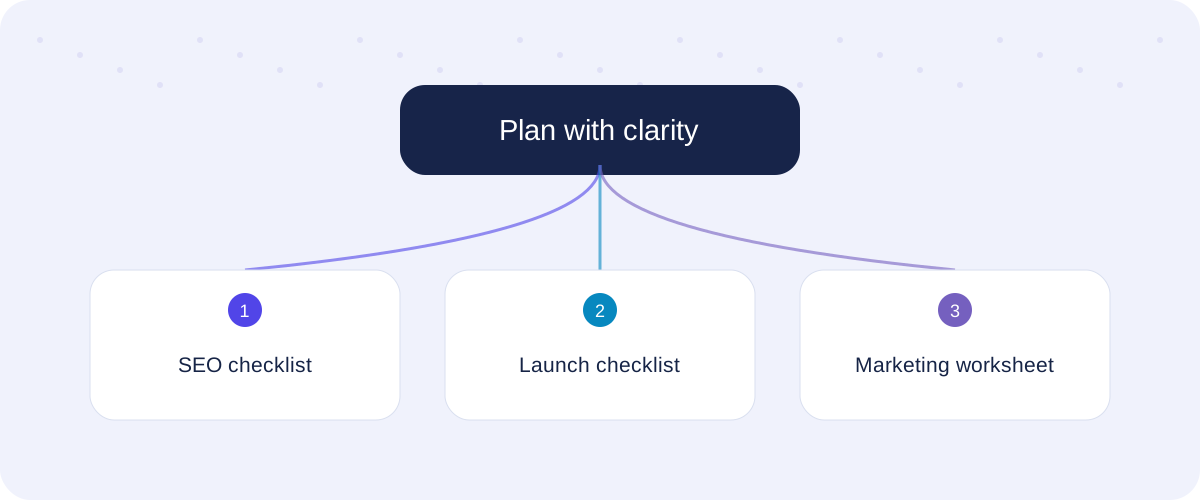
SEO checklist
A two-page review of search foundations, useful content, local visibility and measurement.
Download PDF · 2 pagesPDF · 2 pages
Website launch checklist
Check mobile journeys, content, redirects, accessibility, forms and launch readiness.
Download PDF · 2 pagesFillable PDF · 3 pages
Marketing planning worksheet
A three-page fillable worksheet with 27 fields to organise goals, audience, channels and measurement.
Download Fillable PDF · 3 pagesDownload the planning worksheet as CSV. Resources are currently in English.
Discuss your completed plan with SEOptimizer.
In this guide
How can these resources help me make better marketing decisions?
The resources help turn a broad ambition into questions that can be checked and discussed. You may want more relevant enquiries, a clearer website or a better launch process. A checklist makes it easier to notice missing information and assign responsibility. A planning worksheet helps connect audience, offer, channels and measurement before the business commits to more activity.
They are starting tools rather than automated audits or a substitute for reviewing your actual website. Use them to record observations, uncertainties and the next decision. A completed worksheet does not establish that a site is technically sound or ready to rank. The value comes from the evidence and actions you attach to each item, not simply from marking every box as complete.
What is included in the SEO checklist?
The two-page SEO checklist brings together search foundations, useful content, local visibility and measurement. It encourages you to look at whether important pages can be reached and understood, whether their explanations match real customer questions and whether visitors can follow a useful next step. It also provides a way to separate technical obstacles from content or business-information gaps.
Work through the checklist using actual pages. Start with your most important service rather than checking every minor page with the same level of urgency. Note the page address, the issue observed and why it matters to a reader or search engine. When a question cannot be answered confidently, record it for review instead of assuming that an unfamiliar technical setting is correct.
How should I use the website launch checklist?
The two-page launch checklist follows the experience a visitor will have when a website goes live. It covers content, mobile journeys, navigation, forms, redirects, accessibility and measurement readiness. Use it before the launch decision, while there is still time to correct important issues. A visually finished page can still contain broken links or an enquiry route that fails.
Assign an owner to each required check and keep evidence where appropriate. Test the contact number and email links, review important pages at narrow widths and verify what the form actually reports after submission. If the site replaces older URLs, check the intended redirects. Avoid treating a single homepage review as proof that every category, article and contact journey works.
What does the marketing planning worksheet contain?
The three-page marketing planning worksheet is a fillable PDF with 27 fields. It provides space to organise the business goal, audience, offer, channel priorities and measurement approach. It is useful when several people need to agree what the marketing work is meant to achieve. The downloadable CSV offers another format for working with the planning information.
Complete the fields with clear statements that another person could understand. Describe the customer group and the action you want them to take, then explain why the chosen channel may help. Record the resources and dependencies needed to support the plan. If a figure or assumption has not been verified, label it as an estimate or an open question rather than presenting it as an established fact.
How do I turn checklist findings into priorities?
Group findings by the customer task they affect. A broken enquiry form, incorrect contact detail or inaccessible service page may prevent a useful action immediately. A weak explanation or missing supporting article may require a different type of improvement. The most visible design issue is not always the issue with the greatest effect on the intended journey.
For each priority, record the problem, the proposed action, the person responsible and the evidence that will show whether the action was completed. Consider dependencies: rewriting a service page may require business approval, and changing a URL may require redirects and link updates. This approach produces a manageable plan rather than a long list of disconnected requests.
How can the resources support an agency or supplier discussion?
Use the completed documents to explain your starting point and the decisions you need help making. They can reveal where your team already has reliable information and where an additional review is required. Sharing a clear goal and a few specific observations makes proposals easier to compare than asking every supplier to guess the same requirement.
Ask how the suggested work addresses the findings and which assumptions it makes. Clarify whether implementation, content preparation, platform changes and ongoing observation are included. A resource checklist is not a statement that every possible task belongs in the project scope. The final plan should identify the work that matters for your business and make responsibilities clear.
Compare service approaches before commissioning work · Request a consultation
What should I record about measurement and enquiry quality?
Define the outcome before choosing the report. A page view, a button click, a submitted enquiry and a completed sale are different events. Explain which one the plan is trying to improve and how its relevance will be assessed. If your team receives unsuitable enquiries, record the pattern rather than reporting only the total number of contacts.
Also record limitations. Referrer information can be unavailable, tracking may be incomplete and a customer may interact with several channels before making contact. A good planning document distinguishes observed information from an interpretation. This makes later reviews more useful and helps prevent a short-term change in a metric from being presented as proof of a specific marketing cause.
How should I save, review and maintain the documents?
Download the files and keep a dated working copy for your project. The resources are currently provided in English and do not require a sign-up. A PDF viewer needs to support form fields for the fillable worksheet; check that entered values remain visible after saving a copy. The CSV is available if a spreadsheet-based working format is more convenient.
Revisit the documents when the website, offer or audience changes. Old answers can become misleading if contact details, service availability or responsibilities have changed. SEOptimizer uses practical planning alongside the supplied 26+ years of hands-on experience, but the information in your working documents still needs to reflect your own business. Use a consultation to discuss the next step when the findings require additional expertise.
How can I distinguish an observation from an assumption in my notes?
An observation describes what you checked: a link opened the wrong page, a phone number was outdated or a form displayed an error. An assumption offers an explanation that still needs evidence, such as believing visitors abandon a page because its content is too long. Keeping them separate helps the team choose the right investigation instead of implementing the first suggested fix.
Add the date and the page or process involved so another person can repeat the check. If the result depends on a particular screen size or account setting, record that context. A concise, reproducible note is more useful than a vague statement that the website needs improvement. Use the resources to build that practical record and to identify where specialist help would be valuable.