
Compare digital marketing approaches
Understand when SEO, paid search, local visibility and website improvements may fit your business.
In this guide
How should I compare digital marketing services?
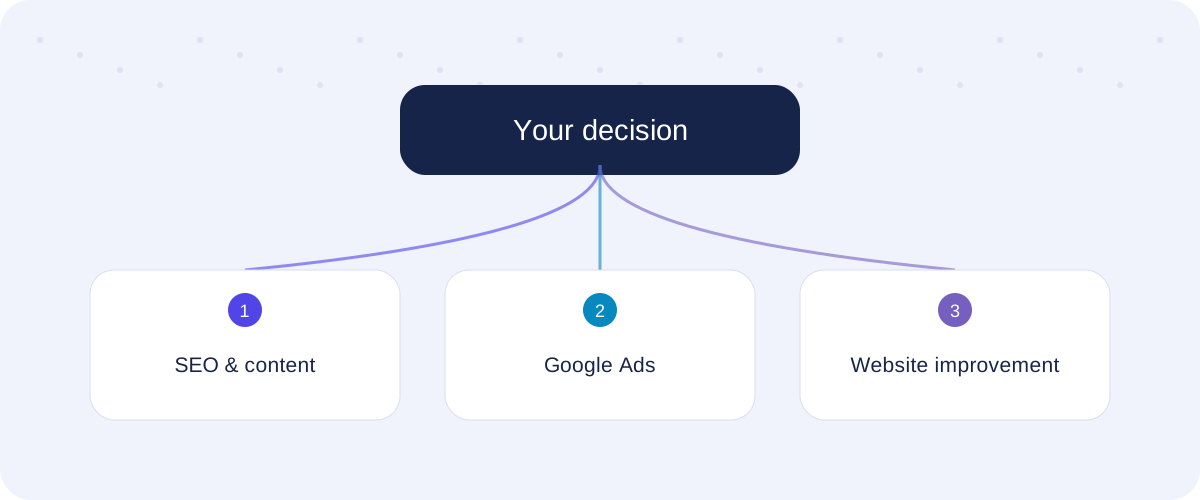
Compare approaches against the same business problem. If one proposal focuses on organic search visibility and another focuses on paid clicks, the deliverables and timelines will differ even when both describe growth. Write down the audience, service, intended action and measurement method before looking at a list of features. This creates a more useful comparison than choosing the longest package.
A good comparison also distinguishes what the service provider controls from what other platforms decide. Work on content, technical improvements and campaign configuration can be specified. Search rankings, advertising approval, competition and customer decisions cannot be guaranteed. Ask how the approach addresses your starting point, which dependencies it assumes and what evidence will help you judge progress.
SEO or Google Ads: which is more suitable for my goal?
SEO improves the usefulness, accessibility and organisation of pages for relevant organic searches. It involves ongoing work on content and technical foundations, followed by observation as search engines discover and evaluate changes. Google Ads purchases eligible advertising exposure through targeting, auctions and budget controls. Campaigns can begin receiving traffic after the required setup and approval, but paid traffic depends on continued spending.
The right starting choice depends on how customers search, how urgent the goal is and whether the website can turn attention into a useful next step. A complex service may need substantial explanation before either channel works well. A clearly defined, measurable offer may be suitable for a focused advertising test. Neither approach should be assessed only by the number of visits it produces.
How can organic and paid search work together?
They can share insights while retaining different responsibilities. Relevant advertising search terms may reveal customer questions that deserve clearer service information. Useful organic pages can explain the offer and provide supporting detail for visitors arriving through different channels. The same enquiry-quality feedback can inform both content priorities and campaign decisions.
A combined plan still needs discipline. Avoid using advertising spend to hide a broken form or publishing large volumes of content without a clear reader need. Agree how campaigns, landing pages and supporting articles connect. Keep reporting definitions consistent so an advertising click is not compared directly with an organic enquiry as though they represent the same outcome.
What is the difference between local SEO and broader SEO?
Local SEO addresses the discovery needs of a business serving a genuine area. Visitors may need to know where the service is available, how to contact the business and which details distinguish it from other nearby options. Broader SEO can address regional, national or online demand through service, product, category and educational pages.
The distinction is about customer needs and availability, not simply adding a place name to every heading. A company may need local information for one service and a wider content structure for another. Use accurate business details and meaningful page differences. Creating repetitive city pages without additional value makes the site harder to maintain and can disappoint people expecting a locally relevant answer.
Website redesign or targeted improvement: how do I decide?
A redesign becomes more persuasive when the platform or information structure prevents the site meeting important needs. Examples include a difficult publishing process, unsuitable navigation or a layout that cannot support essential customer tasks. Targeted improvement can be appropriate when the foundation is sound but specific pages, forms, images or performance issues create avoidable friction.
Before choosing, list the tasks visitors struggle to complete and the constraints your team faces. Preserve useful existing pages and URLs during a redesign, with redirects where appropriate. A new appearance does not automatically improve search visibility or enquiry quality. The proposal should explain how the chosen approach addresses the identified problem and how the result will be checked before launch.
Explore website design and development · Use a website launch checklist
Technical SEO or content work: which comes first?
Technical SEO helps establish whether important pages can be accessed, discovered and interpreted reliably. Content work helps those pages answer the intended reader question. If a page cannot be reached or is unintentionally excluded, expanding its copy alone will not resolve that obstacle. If the page is accessible but does not explain the service, a technical change alone may not make it useful.
Prioritise dependencies and impact rather than treating the two as competing packages. Start with obstacles that prevent important customer journeys, then improve the explanations and internal connections those journeys require. Some work can proceed together when responsibilities are clear. Record why a task matters so the plan remains understandable to the people approving and maintaining the site.
How should I compare proposals and marketing costs?
Ask for a description of deliverables, responsibilities, exclusions and review points. Check whether advertising media costs are separate from management work, whether content preparation is included and who supplies images or approvals. Understand whether third-party subscriptions, hosting or development changes are needed. A price is difficult to assess when these boundaries are unclear.
Compare the approach to measurement as carefully as the work list. Suitable reporting should connect agreed activities with relevant customer behaviour and qualified outcomes. Different businesses need different definitions, and incomplete tracking can limit conclusions. A proposal should make those limits visible instead of presenting every recorded interaction as proof of commercial success.
What information helps SEOptimizer recommend an approach?
Bring your main services, intended customer groups, genuine service areas and current website. Explain what makes an enquiry worthwhile and how your team currently responds. If you have analytics or campaign information, discuss suitable access rather than sending passwords in an enquiry. Note any deadlines, approval requirements or technical dependencies that could shape the scope.
SEOptimizer draws on the supplied 26+ years of hands-on experience and many customer relationships when considering these decisions. The useful outcome of a first discussion is a clearer starting point, not a claim that one channel is always best. A focused plan can identify what to improve first, what to test and what needs more evidence before committing further resources.
How can I avoid comparing options that solve different problems?
Make a short comparison table using the intended customer action, the work included, required inputs and the review method. Put uncertainty in its own column. If one option includes a content rewrite while another assumes the copy is already suitable, record that difference before comparing prices or proposed dates. It may explain why apparently similar offers have different scopes.
Then ask whether both approaches address the same obstacle. A traffic campaign and a form repair can both relate to enquiries, but they operate at different stages of the journey. You may need one, both or additional evidence. A useful comparison identifies these relationships instead of reducing the decision to a contest between channel names.